Fredericksburg, TX · Gillespie County · The Texas Hill Country
If you've been finding sugar ants in the kitchen or fire ant mounds in the yard, we'd be glad to come out and take a look. We've provided ant control for homes and properties in Fredericksburg and Gillespie County since 1979. We'll identify which ant you have, use the treatment that's right for it, and treat the colony at the source rather than just the ants you can see.
When you have ants in the house or mounds in the yard, you want them treated properly, and you want the treatment to hold. A store-bought spray only reaches the ants you can see, so it takes someone who can tell which ant you have and find where the colony is.
Hill Country Pest Control is family owned and operated in Fredericksburg, and we've been treating ants in Gillespie County homes and yards since 1979. We'll come out, identify which ant it is, and treat the colony at the source instead of just the ants you've been seeing. Ants are covered on every residential pest control plan, and on a scheduled plan, if they come back between visits, we come back out at no additional charge.

We provide ant control for homes and commercial properties across Fredericksburg and Gillespie County. Fire ants, carpenter ants and sugar ants are each treated differently, so the first step is finding out which one you have. When you call, please tell us where you've been seeing the ants, and we'll be glad to come out and take a look.

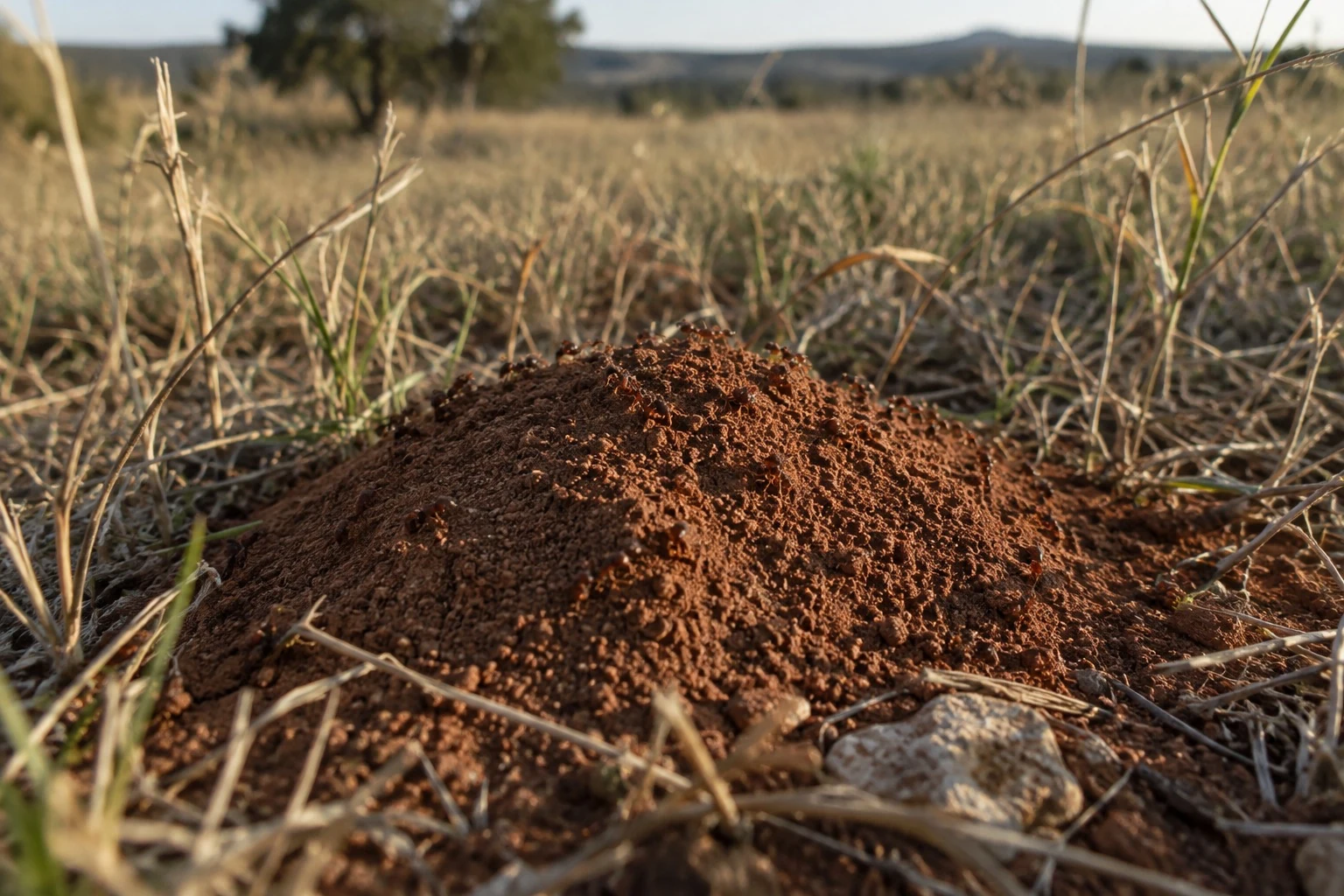
Fire ant mounds turn up in yards, pastures and open ground across Gillespie County, and we treat them wherever they are on the property, including the ground around barns and outbuildings. Our Executive Service treats the house and the entire lawn, and it's especially effective against ant infestations. If you have acreage, please tell us roughly how much ground you need covered when you call.
Ask About Fire Ant Control
Carpenter ants, also called wood ants, are second only to termites as the most destructive wood-damaging insect around Fredericksburg. Unlike termites, they don't eat the wood but excavate it to make their nesting galleries, and they prefer wood that is damp or already decaying. Our carpenter ant pest control starts with finding the nest. We treat it with a combination of conventional treatment and baiting to eliminate the complete colony, and we'll tell you if we found a moisture problem or a tree touching the house that is giving them a way in.
Request an Inspection
Sugar ants are the small ants you find trailing through the kitchen and the bathroom, because they nest near water and forage indoors. They are less destructive than carpenter ants, but they are harder to get rid of, because a sugar ant colony holds multiple queens and killing one queen does not end the infestation. Please don't spray them with a store-bought ant killer, which can make the problem worse. After an inspection we put together a treatment plan for your house and give you our recommendations for keeping them from coming back.
Ask About Sugar Ant Control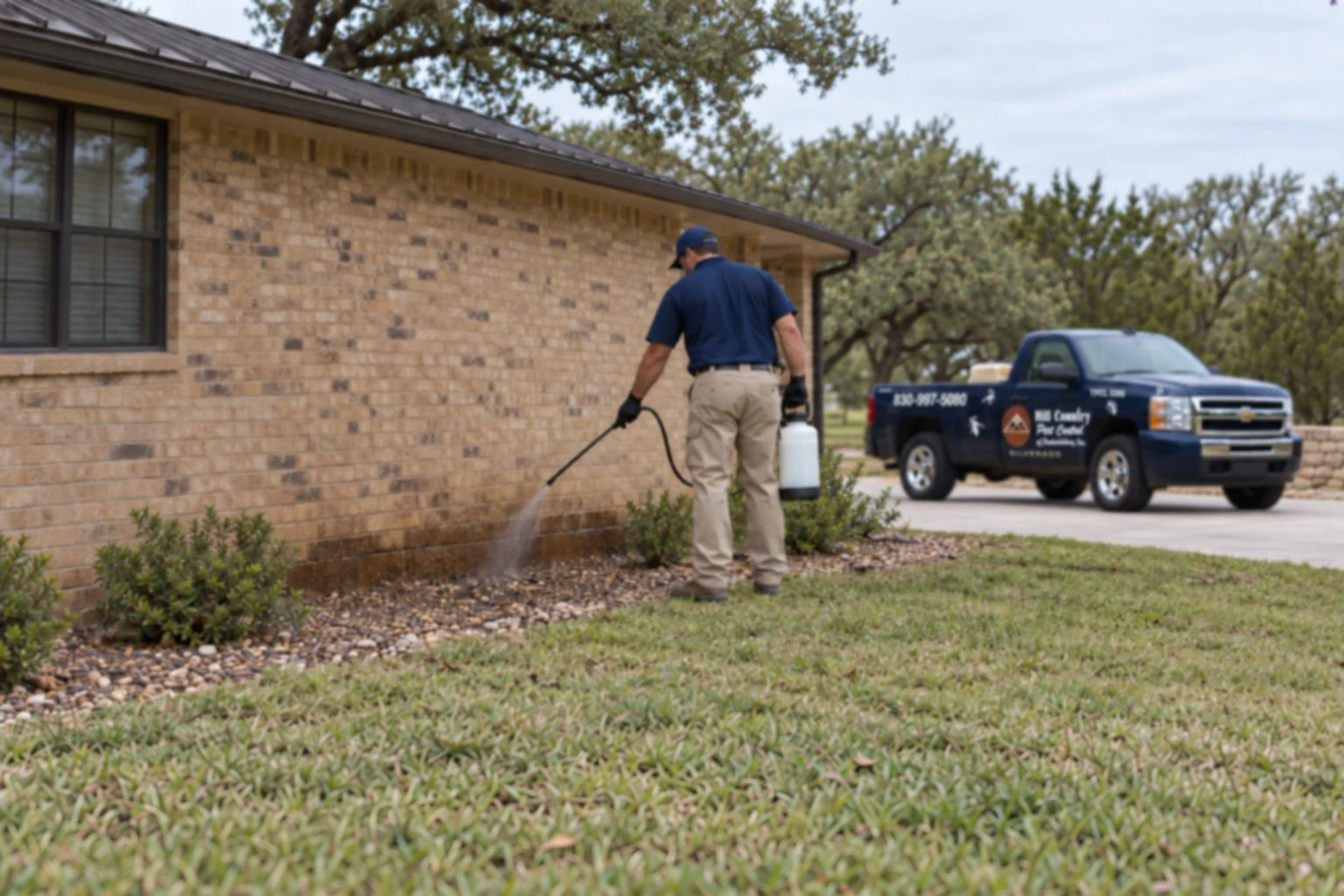
Whether the ants are inside the house or out in the yard, we find where they're coming from and treat the colony itself, so they don't come right back.
Ants, including sugar ants and carpenter ants, are covered on every one of our residential pest control plans. On a plan, if the ants come back between visits, we come back and treat them at no additional charge.
Hill Country Pest Control has treated ants in Fredericksburg-area homes and yards since 1979. We know the ants that live here and how each one is treated, and we'll tell you what we find on your property.
The three ants we treat most often around Fredericksburg look different and nest in different places, and knowing which one you have is the first step in treating it. If you aren't certain which one you have, please send us a photo or describe it when you call.

Fire ants are small, reddish brown ants that build loose mounds of soil in open ground, and they sting repeatedly when the mound is disturbed. The Texas A&M AgriLife Extension Service's Field Guide to Common Texas Insects notes that “a ‘mature’ colony can contain over 200,000 ants,” and that each colony has one or more queens.
Photo: Natasha Taylor, CC BY 4.0

Carpenter ants are the largest ants you'll see around the house, black or red and a quarter to three quarters of an inch long, with large jaws. They nest in damp or decaying wood, in trees, fences and firewood outdoors and in beams, joists and siding indoors, and they leave small piles of what looks like sawdust below the nest. A tree touching the house is a common way in.
Photo: Muéro, public domain

Sugar ants are small dark ants that trail along counters, backsplashes and sinks, because they nest near water and are after the food in the house rather than the house itself. Despite the name, they'll eat sweet or salty food. A colony holds multiple queens, which is why a store-bought spray rarely gets rid of them.
Photo: Theo Summer, CC BY 4.0
A can of ant spray kills the ants that are out foraging, and the colony sends out more. With sugar ants it can make things worse. Their colonies hold multiple queens, and when the foragers stop coming back, the colony can increase production, so you end up with more ants than you started with.
Fire ant mounds are the same problem on a larger scale. The mound is only the visible part of a colony that is mostly underground, so treating the mound from the top or pouring something on it often just moves the colony a short distance. Getting rid of ants means reaching the queens, and that is what a professional treatment is for. If you've already tried something and the ants are back, give us a call and we'll get you on the schedule.

Ant control in Fredericksburg follows a simple three-step process, from your first call to the treatment.

If you've been seeing ants in the house or in the yard, give us a call and we'll get you on the schedule.

The technician inspects inside the house and out, finds where the ants are coming from, and identifies which ant it is. You'll have our recommendation and a quote before any work begins.

We treat the colony, and the treatment depends on which ant it is. On a residential plan, if the ants return between your scheduled services, we come back out at no additional charge.
“Great place to do business with, I wouldn’t go anywhere else!”
“Helpful, friendly, and no bugs”
“Always prompt and attentive.”
Our ant control service covers homes, yards and acreage across Fredericksburg and Gillespie County. Our service area includes the following towns.
If you don't see your town, give us a call at (830) 997-5080 and we'll tell you if your property is within our service area.

If you have any additional questions, don't hesitate to call us at (830) 997-5080.
Yes. We treat fire ant mounds in yards, pastures and on acreage across Gillespie County, including the ground around barns and outbuildings. If the mounds are in the lawn around the house, our Executive Service covers the house and the entire lawn. For larger acreage, please tell us roughly how much ground you need covered when you call, and we'll give you our recommendation and a quote before any work begins.
Because the mound is only the visible part of the colony. The Texas A&M AgriLife Extension Service's Field Guide to Common Texas Insects notes that “A ‘mature’ colony can contain over 200,000 ants,” each colony has one or more queens, and “queen ants can produce about 200 eggs per day.” Disturbing the mound or pouring something on it doesn't reach the queens, so the colony rebuilds or moves a short distance away. The treatment has to reach the colony itself.
Carpenter ants don't eat wood. They hollow it out to nest in and push the shavings out of the nest, so you'll usually find small piles of what looks like sawdust underneath. Termites feed on the wood from the inside and leave the surface alone, so there is usually nothing to see on the surface. Carpenter ants are also much larger, with a narrow waist and elbowed antennae, while a termite's body is the same width from front to back. Mud tubes on a foundation mean termites, and our termite control page covers them.
Often, yes. Carpenter ants prefer moist or partially decayed wood, so finding them tends to point to a leak, poor drainage or wood that stays damp. Trees touching the house also give them an easy way in. When we treat carpenter ants we'll tell you what we found, because treating the ants without correcting the moisture usually means they come back.
Because a store-bought spray kills the foragers and not the colony, and a sugar ant colony holds multiple queens. The colony can also increase production when foragers fail to return, so spraying can leave you with more ants than you started with. A professional treatment reaches the colony itself, and after we've inspected the house we'll give you our recommendations for keeping them from coming back.
Near water, which usually means the kitchen or the bathroom. They are smaller than most ants, so they get into places larger ants can't, and they'll eat sweet or salty food. The trailing ants you see on the counter are only a small part of the colony. They are after the food in the house rather than the house itself, so they are a nuisance rather than a structural problem.
With baiting, the worker ants pick up the bait and carry it back to the colony, where it reaches the queens. That's why we use baiting alongside conventional treatment for carpenter ants, so the whole colony is eliminated rather than just the ants that are out foraging. It takes a little longer to work than a spray, because the ants have to keep foraging to carry it back.
Yes. Ants, including sugar ants and carpenter ants, are covered on every residential pest control plan, and if they come back between your scheduled visits, we come back out and treat them at no additional charge. If the ants are coming from the yard, our Executive Service treats the house and the entire lawn. The other pests we treat, such as scorpions and spiders, are listed on our other pests page.
Every structural pest control business in Texas is licensed by the Texas Department of Agriculture. Our license number is TPCL 5395. The products we use are applied according to their labels, which is what that license requires. If there are pets, children or livestock on the property, please let us know before the visit, and the technician will explain what is being used and what to do during and after the treatment.
It depends on several factors, such as which ant you have, the size of the property and how far the infestation has gone, so we need to gather some information from you before we can give you a quote. Give us a call and describe what you're seeing. We'll make our recommendation and explain what it will cost before we do anything else.
We provide ant control in Fredericksburg and the rest of Gillespie County, along with Stonewall, Harper, Johnson City, Blanco, Llano and Mason. If you aren't certain whether your property is in our area, please call and ask.
Give us a call or send us a few details through the contact form, and we'll get you on the schedule for an inspection and treatment.